


You don’t have to go to a nice restaurant to have a really good steak.
Learn about ribeyes from Max the Meat Guy.
Technique: Easy & Delicious Boneless Ribeye
Make delicious, melt in your mouth boneless ribeyes at home… even if you're "not a good cook". You are. You just don't know it yet. 😊P.S. I never planned on posting this picture of my steak on a recipe so no judgments, please. I have it topped with sautéed mushrooms. We'll cover that some other time 😉
Yield: 1 ribeye
Equipment
- 1 Cast iron skillet¹ (See notes)
- 1 Pair of tongs
- 1 Basting spoon
- 1 Sheet pan² (See notes)
- 1 aluminum foil
Materials
- 1 Boneless ribeye¹ (Minimum 1" thickness)
- Coarse salt
- Fresh ground pepper
- 2 Cloves Garlic (Crushed)
- 2 tbsp Real butter
- 1 Sprig Fresh rosemary
Instructions
- Set ribeye out at room temperature for 1 hour
- Generously sprinkle with salt and pepper. Don't forget the sides, too.
- Turn on stove to a medium-medium high heat, place skillet on top, let pan get nice and hot before placing steak in it. This will help give it a fantastic sear which is called a Maillard² reaction. See more about that in the notes section below.
- Place steak in, laying it away from you. It's good practice to do this any time.
- Let the steak sear for about 3-4 minutes. Don't flip it. Just let it cook and check to make sure it's not burning. You want a crust, not burnt.
- Pick the steak up in your tongs and hold it on its side until the fat is rendered. Not only does the steak look nicer, but rendered fat makes any steak taste better.
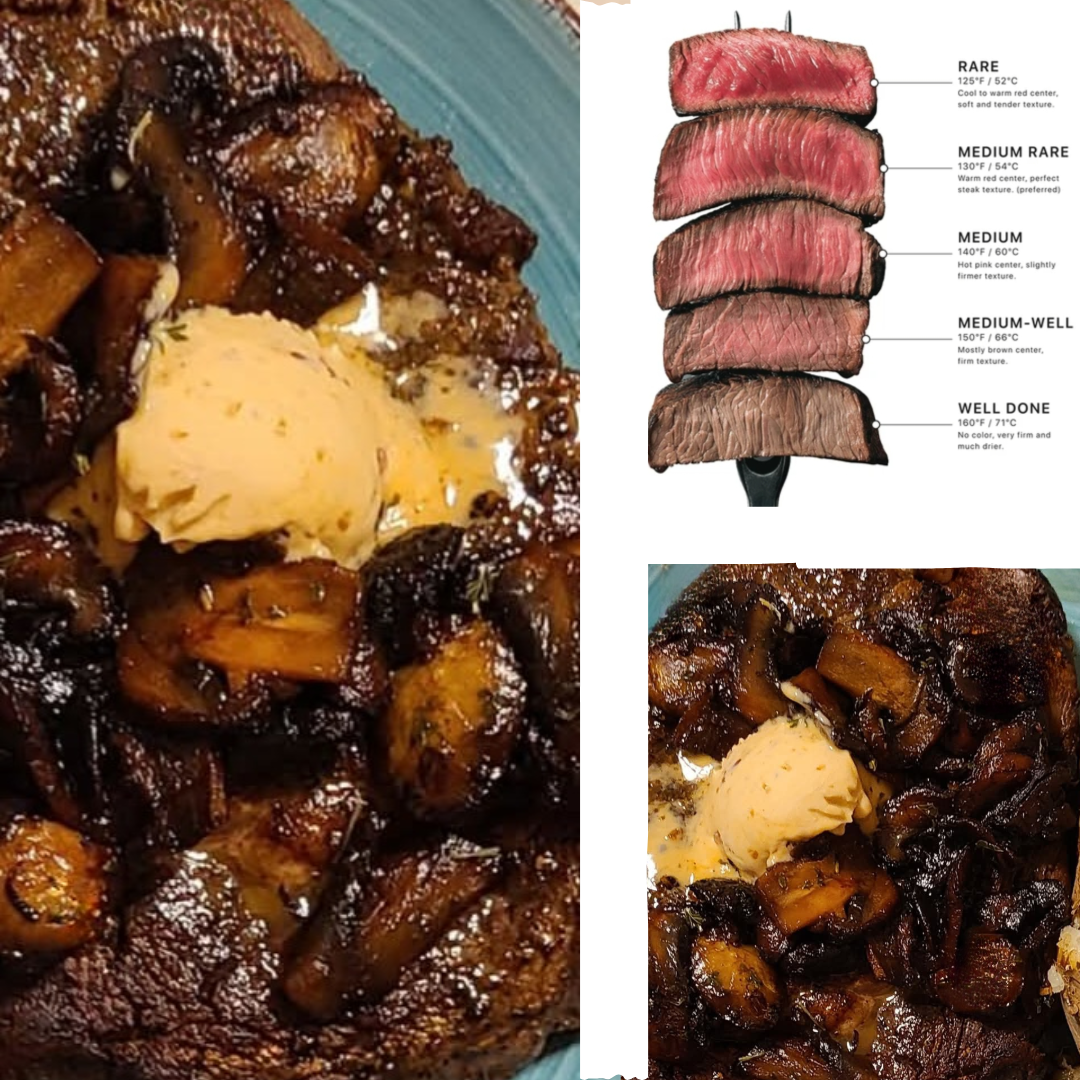
- Flip the steak to the opposite side until you achieve one of two things. 1.Your desired internal temperature (explained below) using a meat thermometer. Place it directly in the center of the thickest part. OR2.A very nice crust on both sides. If you have and your steak is not done to your desired temperature, then you can use your oven (preheated to 400°F) to finish the cook. *If your steak is grey, then you haven't achieved the right look… or taste. Try until you reach the desired temperature
- When your steak has reached the desired temperature, turn off the stove.
- Toss the butter, garlic, and rosemary into the skillet.
- Take your spoon, tilt your skillet safely toward you, and begin basting your steak for about 1 minute.
- Place your steak on a clean plate and tent (upside down V) foil it for 20 minutes. This will complete the cooking for you as well as allowing the steak to reabsorb the juices.
- Enjoy that juicy, oh-so-tasty, why have you been paying so much at restaurants all this time, steak. This will turn you into a steak snob and that's PERFECTLY acceptable.
Notes
- Rare: 120-130°F (cool red center)
²The secret lies in the Maillard reaction, an intricate dance between amino acids and reducing sugars that begins when food reaches a certain temperature. This chemical interplay is not just a browning effect; it’s a complex creation of new flavors and aromas. As the surface dries and the temperature rises, the simple sugars and amino acids in the bread begin to react, creating unique flavor compounds and changing the color of the bread to the characteristic brown we associate with toast. This complex chemical transformation is responsible for the rich, savory flavors we enjoy in seared meats and freshly toasted slices of bread ChefIQ.com²You will only need a sheet pan if your steak didn’t cook to temperature AND your skillet is not oven safe.